
1st Aug 2025
11th Sep 2025
12th Nov 2025
Since inception, Ajman Bank has played an important role in advancing the UAE economy and achieving national financial success. The Sustainability agenda, with the impetus to act on climate and wider sustainability issues, is well-recognized by the Board, management, and staff, being a focus area of extensive effort to accelerate the Bank’s sustainability journey.
As one of the leading providers of Shari’ah-compliant financial services in the UAE, Ajman Bank discerns strong potential synergies between sustainability principles and Islamic finance. Shari’ah principles inherently prioritize ethical and societal welfare considerations, rendering Islamic financial institutions ideally positioned to embrace innovative solutions addressing environmental, social, and governance challenges. Ajman Bank remains vigilant in monitoring emerging market opportunities and eagerly anticipates exploring sustainability-focused products and risk management practices in the future while ensuring alignment with Shari’ah principles.

Ethical, Shariah-Compliant Innovation powers green banking

Partnerships for Long-Term Value strengthen growth and resilience

Alignment with Ajman Vision 2030 and UAE Net Zero 2050
The initiative ´We the UAE 2031´ strives to materialize the future vision outlined by His Highness the President of the UAE, transforming it into palpable progress. We share the view that every institution within the UAE is dedicated to realizing this vision, ultimately advancing towards the goals outlined in the UAE Centennial Plan 2071 and adhering to the principles of the 50. Ajman Bank is proud to be one of the entities aiming to contribute towards this shared ambitious vision through our sustainability initiatives.

Ajman Bank has a goal of developing UAE nationals to equip critical roles by providing necessary training/ coaching and mentoring. The Bank has an Emiratization Program spanning recruitment, retention, training and development, educational assistance, and career progression.
Ajman Bank provides a comprehensive training program to our employees, in line with a training calendar released each year.

Ajman Bank aims to play a pivotal role in driving the economic development of Ajman and actively contributes sustainable transformation of the UAE.

Ajman Bank is embarking on a journey to assess and develop implementation plans to mitigate our environmental impact, both within operations and the portfolio.

Ajman Bank is improving its data security and customer privacy efforts by engaging with leading third-party providers.
The UAE has developed a Net Zero by 2050 strategic initiative as a national drive to achieve net-zero emissions by 2050. We acknowledge the opportunity to contribute to this goal. As we mature on our sustainability journey, we will strive to develop an approach to further understand our climate impact and decarbonize our operations and portfolio.
Emirate of Ajman - Our proud Home and Hub for sustainable growth
As the Hom Emirate of Ajman Bank, we align our sustainability effort with the Ajman Vision 2030 as well, with focus on the following pillars:
Ajman has emerged as a dynamic center for business, investment, and sustainable development, supported by its strategic location, strong infrastructure, and government backed incentives. The emirate is a growing hub for manufacturing and exports, with goods reaching over 100 countries, and its Free Zone hosts more than 9,000 companies from 160+ nations. Alongside its economic strengths, Ajman offers a rich cultural environment and attractive lifestyle destinations. Ajman Bank plays a key role in this progress by promoting sustainable finance and ESG aligned practices, contributing to the emirate’s long term vision for inclusive and environmentally responsible growth.
On May 1, 2025, Ajman Bank announced a strategic commitment to mobilize 4 billion in sustainable finance by 2030, and to achieve Net Zero emissions across our operations (Scope 1 & 2 Emissions) by 2030 and overall Net Zero (Scope 1, 2 and 3) by 2050. This commitment is anchored in a three-pillar roadmap:
Achieving Net Zero Emissions in our internal operations (Scopes 1 and 2) by 2030
Mobilizing 4 billion in sustainable finance by 2030
Achieving Net Zero Finance Emissions (Scope 3) by 2050



“Our Net Zero strategy represents the convergence of our financial expertise and environmental responsibility. As custodians operating within the framework of Islamic finance, we recognize that true stewardship extends beyond financial assets to encompass our natural resources and environmental heritage. This strategy enables us to make meaningful contributions to the UAE´s climate ambitions while creating sustainable value for our stakeholders."

“We have developed a structured framework that integrates sustainability considerations into every aspect of our business model. This includes comprehensive emissions measurement protocols, strategic reduction initiatives and innovative financial product development. By establishing this robust infrastructure, we can ensure that our environmental commitments translate into tangible actions and measurable results, creating lasting value for our shareholders, clients and the broader community.”
Ajman Bank´s commitment to sustainability includes all aspects of ESG. Our Sustainability Framework is built on 3 key fields of play, each containing targeted action points for the effective realization of its ambition., we are committed to supporting the UAE SDGs and Net Zero by 2050 plans.
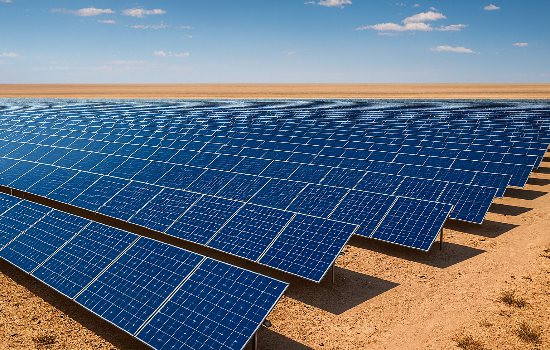
Enable our clients´ sustainability and climate transition, while driving business growth and minimizing risks.
Be a transition partner: Sustainability transformation (and particularly UAE´s net zero journey) will necessitate the real economy´s actions. Yet, as the financiers of the real economy, banks play a key enabler role in this journey.
Ajman Bank is committed to support its clients during this journey with innovative financing solutions. On the flip side, this ambition also entails identifying and managing emerging sustainability related risks.

Enhance our sustainability performance of own operations.
Leading by example: We not only preach our clients to take sustainable action to transform their operations, but also integrate what we preach into our day-to-day activities at the bank.
We are dedicated to lessen the environmental impact of our own operations (such as emissions, water consumption, waste generation), along with enhancing our contribution to employee wellbeing.
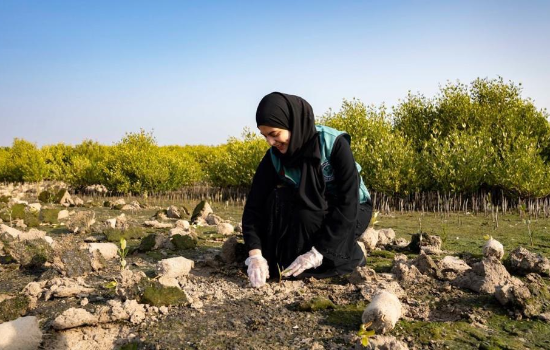
Consolidate our positive impact the communities we operate in.
Serve our communities: As a responsible bank at the heart of Ajman´s economy, we are dedicated to not only the economic thriving of the Emirate, but also the welfare of our communities.
We are committed to channeling our charitable and social contributions towards social causes that resonate with our values as a Shari´ah-compliant bank.
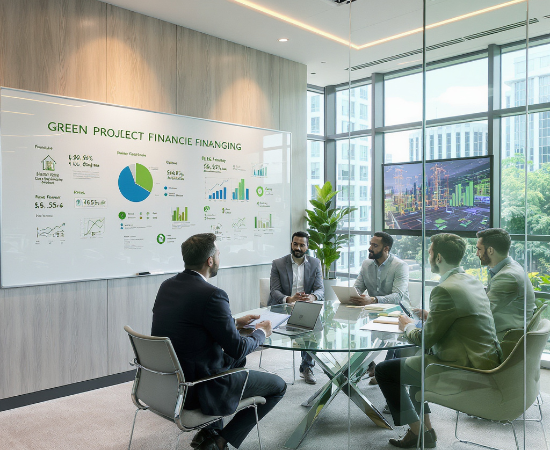
In 2025, we launched our Inaugural Sustainable Finance Framework Policy, to further our contributions towards UN Sustainable Development Goals, UAE Centennial 2071, UAE Net Zero 2050 Goal, and Ajman 2030 vision. The Framework encompasses both environmental and social sustainable finance. The Framework is aligned with relevant global and regulatory standards, and standardizes transaction classification and impact measurement across Retail, SME and Wholesale financing and investment portfolios, enabling transparent tracking of progress toward our sustainable finance goals.


A key pillar of stakeholder engagement on sustainability is a materiality assessment, enabling us to gather valuable views of our internal stakeholders on a range of environmental, social, and governance impacts. As per the GRI standards, material topics are topics that represent an organization’s most significant impacts on the economy, environment, and people, including impacts on their human rights.
The exercise allows us to gain a deeper understanding of which topics across the sustainability landscape matter most to Ajman Bank’s business and our stakeholders. Recognizing that we can deliver the most long-term value across sustainability focus areas that are particularly relevant to the Bank, the identified material issues will inform not only our disclosures but also our strategic approach to sustainability going forward.
With emphasis on stakeholder consultation, Ajman Bank’s materiality process comprised the following steps:
1. Peer and international standards benchmarking
We completed a thorough mapping of material topics considered in the most recent disclosures of our regional peers. To understand the expectations of investors in the UAE, we also consulted the sustainability metrics outlined in the DFM guidance. Referencing international best practices, we cross-referenced works such as Sustainability Accounting Standards Board (SASB) standards for Commercial Banks and GRI. This process allowed us to identify a long list of potentially material areas to assess with our stakeholders.
2. Categorizing topics and assessing relevance to Ajman Bank
Subsequently, we refined the long list by aggregating similar topics into thematic areas and filtering out those with limited relevance to our business context.
3. Prioritizing topics through stakeholder engagement
The refined list of 20 topics was presented to our internal stakeholders who were requested to prioritize them based on impact.
4. Validating the prioritized topics with the senior management.
The final list of topics based on stakeholder prioritization was shared with the ExCo members to validate the results and ensure alignment at the highest management decision-making level.







As part of its commitment to sustainability and environmental stewardship, Ajman Bank partnered with Storey Group to develop the Ajman Bank Forest, a flagship initiative designed to create a measurable and lasting environmental impact. The initiative forms a key pillar of the Bank’s broader ESG strategy and reflects its commitment to supporting the UAE’s sustainability aspirations and net-zero ambitions.
The Ajman Bank Forest is directly linked to the Bank’s Green Rewards Program, whereby a tree is planted on behalf of every customer who subscribes to an eligible green product. This innovative approach enables customers to contribute to environmental conservation through their banking choices, transforming everyday financial decisions into meaningful climate action.
Beyond tree planting, the initiative aims to enhance biodiversity, support carbon sequestration, promote environmental awareness, and create a positive legacy for future generations. Through the development of the Ajman Bank Forest, the Bank continues to demonstrate how financial institutions can drive tangible environmental outcomes while fostering greater customer engagement in sustainability.
By connecting sustainable finance with real-world environmental impact, Ajman Bank is reinforcing its position as a leader in responsible banking and creating shared value for its customers, communities, and the environment.


We partner with you in transitioning to sustainable business models efficiently. Our Sustainability CoE comprises of experts from our Large Corproate and GREs, Commercial Banking, Business Banking, Government, Financial Institutions, Consumer Banking and Treasury & Capital Markets teams who work with the Central ESG and Credit team to provide bespoke advisory to our clients and support in structuring your Sustainability Strategy. The SCoE provides advice to support clients address ESG challenges, help carbon transition, mitigate physical climate risks, and support sustainable, inclusive growth.
The sustainability COE can help businesses in:

Defining their ESG ambitions and in identifying their key challenges/opportunities in pursuing their ambition.

Combined with our financing solutions, we offer a range of advisory support, including ESG strategic assessments, strategy development, and reporting assistance.

We customize our approach to meet the needs of different clients and sectors.
Leverage Our In-house 'Carbonaware House Model' for Your Own Sustainability Journey
The Carbon Aware program is aimed at systematically neutralizing the bank's own carbon footprint through environmental stewardship efforts and promotes use of biodegradable materials, reuse and recycle programs, and energy-efficient practices.
Have questions about our sustainability products or services?


Listen to the content of the page by clicking on listen below...